


29
Nov
Pure roasted and ground coffee is widely favored for its rich, authentic flavor and delicate aroma. However, brewing a delicious cup of coffee at home is no easy feat. This article introduces the characteristics of great pure roasted and ground coffee, how to choose the right type for each brewing method, and highlights common mistakes to avoid when brewing at home.
Characteristics of Great Pure Roasted and Ground Coffee
1. Aroma
Pure roasted and ground coffee possesses a rustic, crisp, and pleasant aroma, free from the harsh, overpowering smell of chemically flavored coffee. Depending on the bean variety and growing region, you can distinctly perceive natural flavor layers such as floral, fruity, or chocolate notes.

2. Roast Date
Pure roasted and ground coffee tastes best when consumed between 7 days and 4 weeks after the roast date-the window when the beans have finished releasing CO2 (degassing) and reached their flavor peak, producing an even, attractive crema or bloom when brewed.
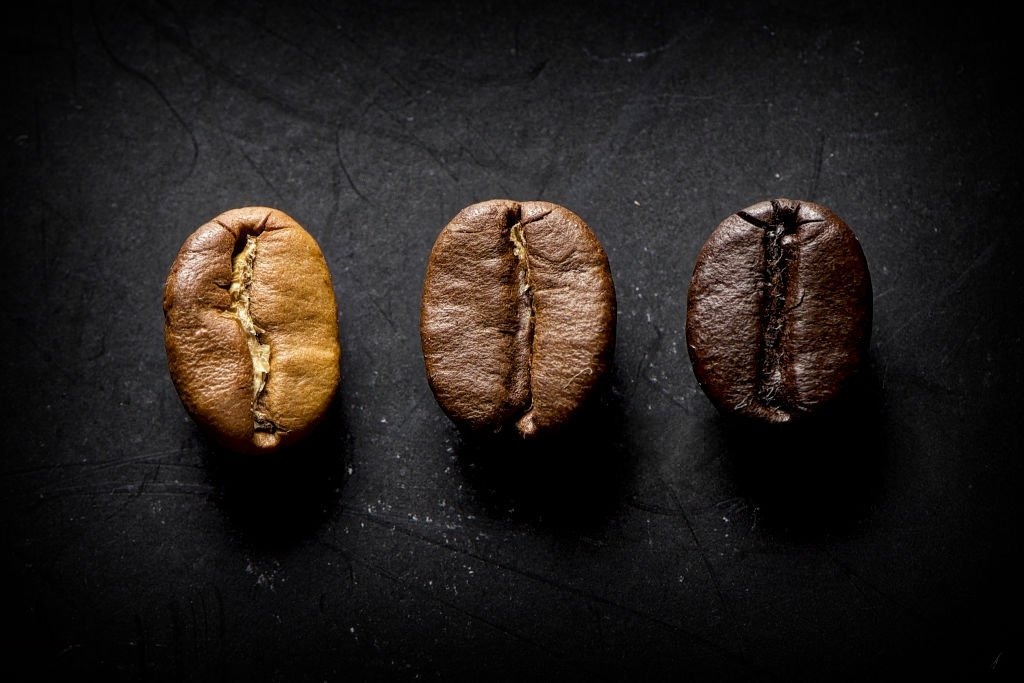
3. Roasting Technique and Quality Across Light, Medium, and Dark Roasts
A standard batch of roasted coffee must have a uniform color from the outside in, with beans neither scorched on the surface nor under-roasted at the core:
- Light Roast: Light brown beans with a dry surface, preserving the signature crisp acidity of fruits and natural floral aromas.
- Medium Roast: Medium brown beans offering a harmonious balance between mild acidity, clean bitterness, a deep sweet aftertaste, and a well-rounded body.
- Dark Roast: Dark brown to nearly black beans with a slight sheen from released essential oils, standing out with bold bitterness, low acidity, and light smoky notes.
4. Strict Raw Material Selection and Production Process
Standard pure roasted and ground coffee must be harvested from ripe coffee cherries (over 95% ripeness), completely removing insect-damaged beans, hollow beans, and impurities. Processing methods (natural/dry, washed/wet, or honey) combined with modern roasting technology allow precise temperature control, retaining natural essential oils without adding butter or synthetic additives. To classify the quality of green coffee beans, manufacturers typically categorize raw materials based on 3 main factors:
- Bean Variety Code: R stands for Robusta (bold flavor, high caffeine), A stands for Arabica (delicate aroma, mild acidity), and C stands for Culi/Peaberry (unique round beans, deep and intense flavor).
- Bean Size (Code S – Screen): The most common sizes are S18 (large beans), S16 (medium beans), and S13 (small beans). Larger and more uniform beans (such as S16 and S18) roast evenly from the inside out, preventing smaller beans from burning while larger ones remain under-roasted.
- Quality Grade (Code G – Grade): Divided into G1 (Grade 1) and G2 (Grade 2) based on bean cleanliness. For example, the code R1 S18 indicates Grade 1 Robusta beans, large size retained on a screen 18, thoroughly sorted to eliminate broken, black, or insect-damaged beans, ensuring the cleanest and fullest flavor profile.
How to Choose Great Pure Roasted and Ground Coffee
1. Choose a Reputable Supplier
Prioritize reputable brands with a long-standing track record, transparent product origins, clearly defined growing regions, and full food safety and hygiene certifications.
2. Buy from Roasteries with Skilled Master Roasters
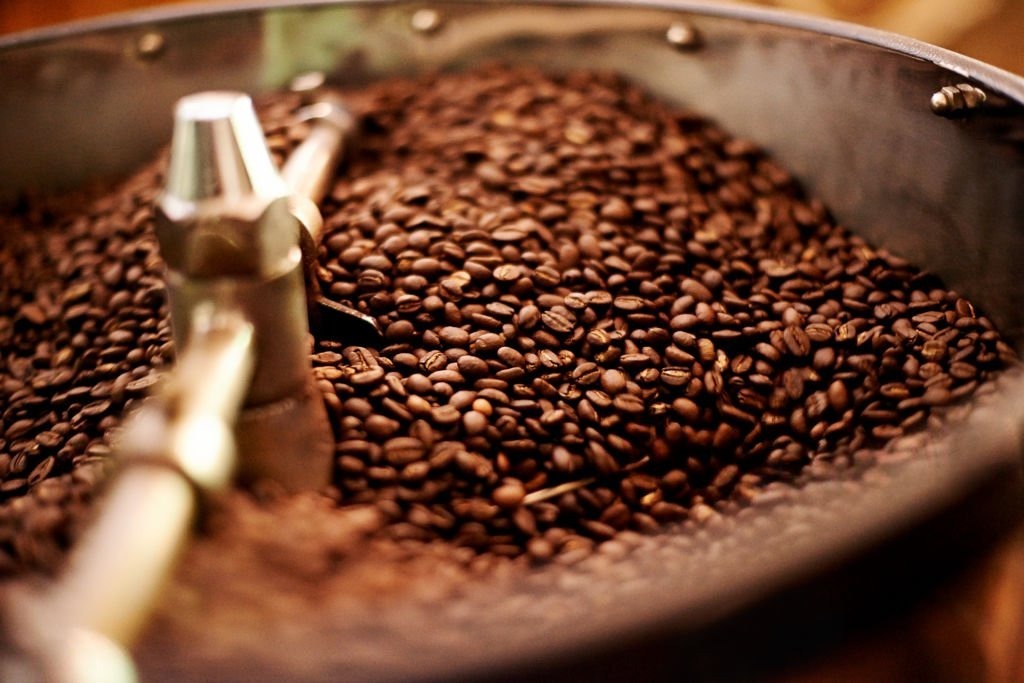
Direct roasteries or shops with experienced roasting teams always ensure freshly roasted batches every week. There, you can easily get tailored advice to match your taste preferences and have the beans ground to the exact size required for your home brewing equipment.
Artisan roasters deliver noticeably higher-quality batches compared to mass-produced industrial products because they deeply understand the characteristics of each growing region and design a dedicated Roast Profile for every batch. Rather than following a rigid formula, skilled roasters listen to the crack of the beans, observe color transitions, and adjust airflow and heat so the beans never scorch or lose their distinctive flavor.
3. Choose Blended Roasted and Ground Coffee
If you enjoy harmony in your cup, blended roasted and ground coffee (a strategic ratio of Robusta and Arabica) is the optimal choice. This combination yields a cup with both the bold body and deep sweet aftertaste of Robusta and the captivating aroma and crisp acidity of Arabica.
Depending on your palate, you can choose one of these 3 popular blend ratios:
- 70% Robusta – 30% Arabica (Traditional Bold Taste): Rich flavor, high caffeine, and thick crema, ideal for Vietnamese Phin filter brewing, iced milk coffee (cà phê sữa đá).
- 50% Robusta – 50% Arabica (Balanced Taste): A harmonious blend of boldness and gentle aroma, well-suited for Espresso machines or hot black coffee.
- 30% Robusta – 70% Arabica (Refined, Aromatic Taste): Highlights fruity notes and a gentle crisp acidity, ideal for Lattes, Cappuccinos, or Cold Brew.
4. Check for the Most Recent Roast Date
Carefully inspect the roast date printed on the packaging. Prioritize pure roasted and ground coffee packs that explicitly state the Roast Date rather than just a generic manufacturing date.
5. Select by Color and Aroma
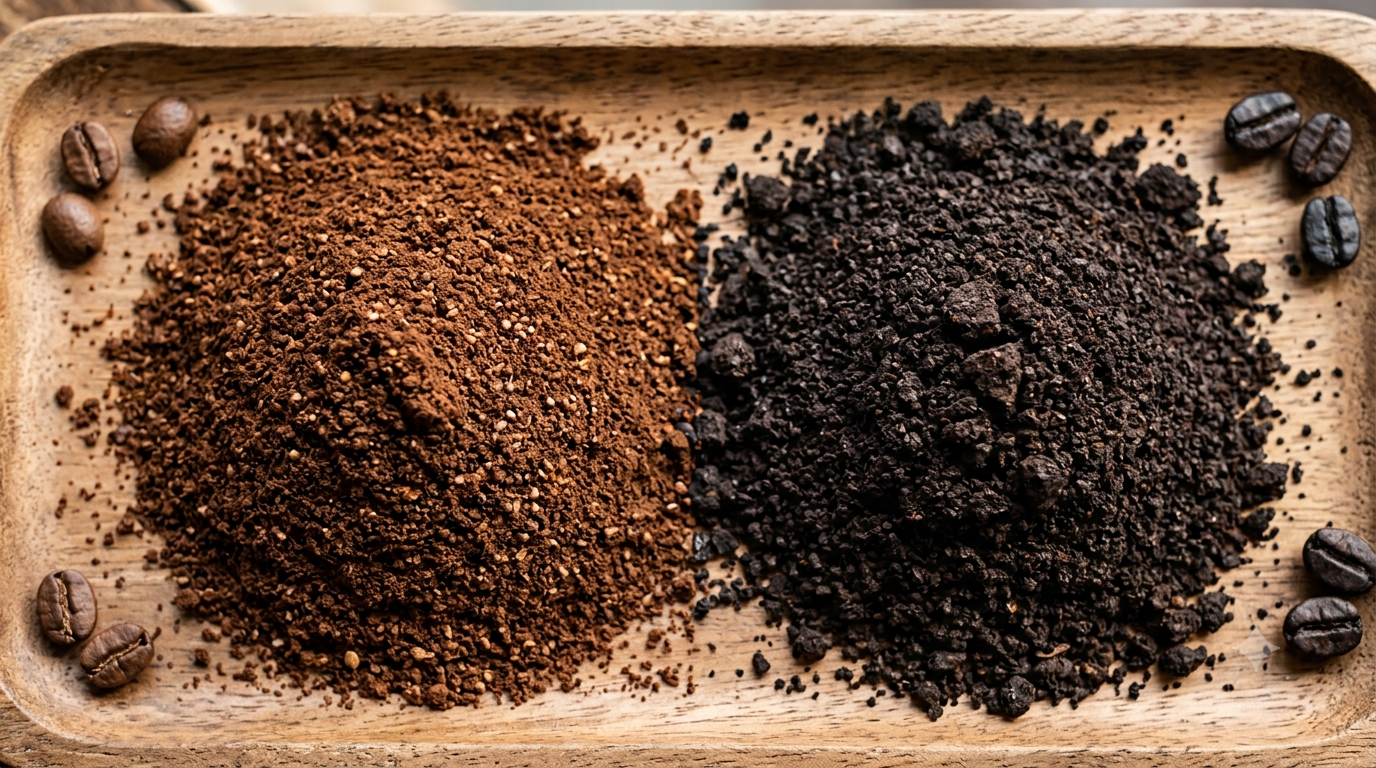
Visually, pure roasted and ground coffee powder has an even brown color, is loose and fluffy, does not clump, and is never pitch-black like burnt corn charcoal. Up close, the grounds emit a mild, natural aroma without leaving a harsh, artificial smell on your hands.
How to Choose Pure Roasted and Ground Coffee for Each Brewing Method
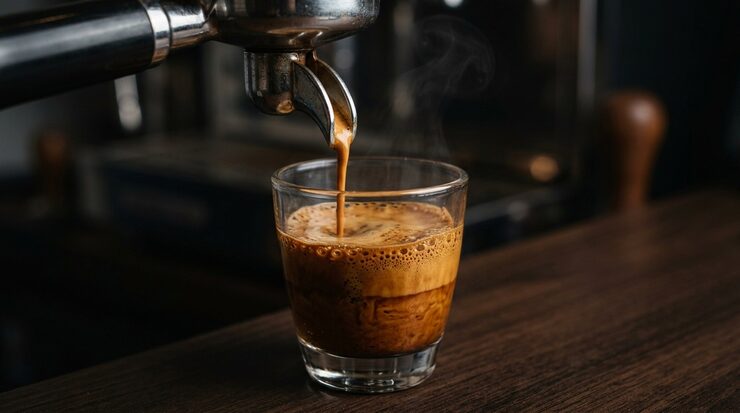
1. Espresso
Bean Selection Criteria for Espresso
- Bean Variety: High-quality Arabica–Robusta blend, such as a 70/30 or 80/20 ratio. Arabica provides layered aromas, while Robusta delivers body, caffeine, and a thick, lasting crema. For specialty-style black Espresso, choose 100% Arabica.
- Roast Level: Medium to Medium-Dark. This roast makes the beans more soluble, tames sharp acidity, and brings out rich caramel sweetness when paired with milk for Lattes and Cappuccinos.
- Grind Size: Fine-slightly finer than table salt-allowing the grounds to be tamped into a dense puck that creates proper resistance against pressurized water.
Barista-Standard Espresso Dial-In Table
| Parameter | Reference Range | How to Adjust |
| Dose | 18–20 g | Use a digital scale accurate to 0.1 g |
| Yield | 36–40 g | 1:2 ratio; dark roasts can use 1:1.5, light roasts 1:2.5 |
| Extraction Time | 25–30 seconds | Under 22 seconds: grind finer; over 32 seconds: grind coarser |
| Water Temperature | 90–94°C | Use higher temperatures for light roasts, lower for dark roasts |
| Pressure | ~9 bar | Determined by the machine; some machines allow pressure profiling |
| Grind Size | Fine | Adjust in tiny increments, changing only one variable at a time |
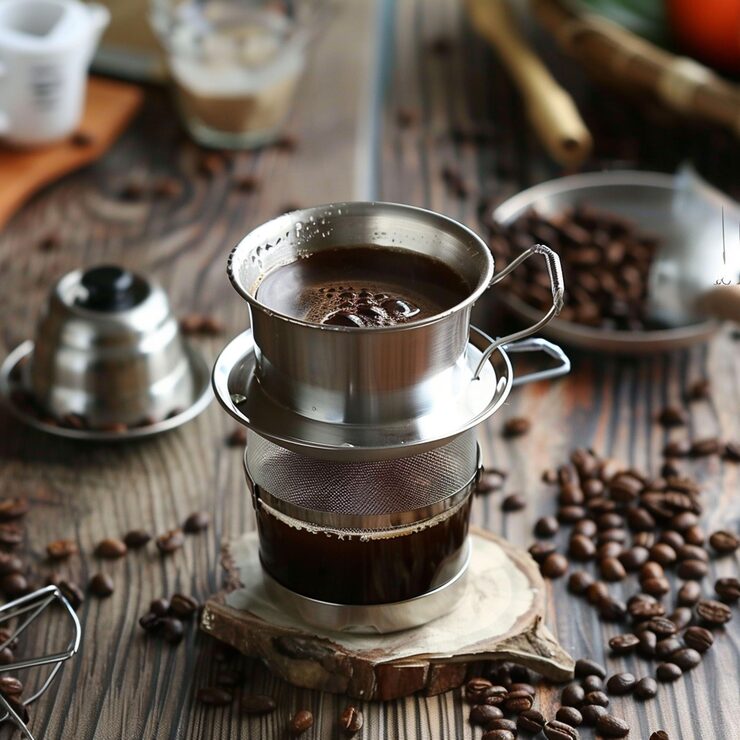
2. Phin Filter Brewing
Bean Selection Criteria for Phin Brewing
- Bean Variety: Robusta or Culi Robusta is the classic choice for a traditional bold, bitter profile; you can blend in 20%–30% Arabica to add aromatic depth.
- Roast Level: Medium-Dark to Dark roast to produce a moderately syrupy extract, a deep cockroach-wing brown color, and a harmonious bittersweet taste.
- Grind Size: Medium-Coarse (similar to raw cane sugar crystals), allowing water to saturate evenly without clogging the filter holes or letting sediment slip through.
Phin Brewing Recipe Table
| Parameter | Reference Range | Notes |
| Coffee Dose | 20–25 g | Standard-sized aluminum or stainless steel Phin filter |
| Coffee : Water Ratio | Approx. 1:4 – 1:6 | Use 80–120 ml of water for 20 g of coffee grounds |
| Water Temperature | 90–96°C | Preheat the Phin and cup with hot water before brewing |
| Blooming | 20–30 ml water for 30–45 seconds | Allows grounds to expand evenly and release CO₂ |
| Total Drip Time | 4–6 minutes | Under 3 minutes: grind finer or tamp firmer; over 7 minutes: grind coarser |
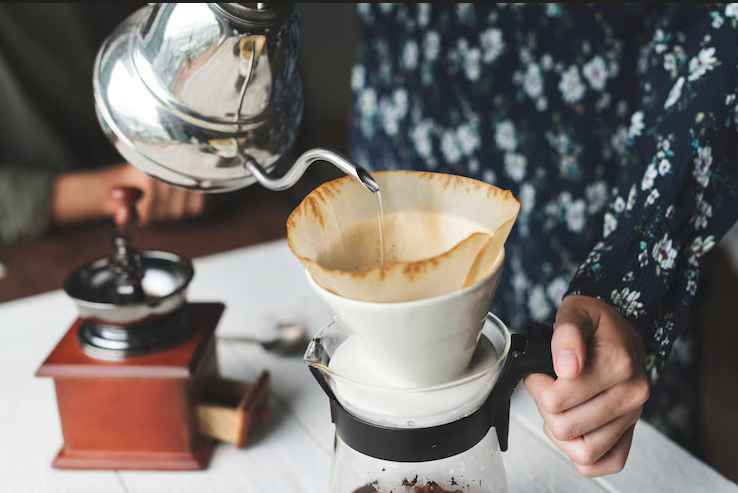
3. Pour Over
Bean Selection Criteria for Pour Over
- Bean Variety: High-quality 100% Arabica to fully celebrate natural floral and fruity notes alongside a clean, delicate sweet aftertaste.
- Roast Level: Light to Medium roast to preserve delicate aromatic compounds and signature bright acidity.
- Grind Size: Medium-Coarse (similar to coarse sea salt or raw sugar) to properly regulate the flow rate through the paper filter.
Pour Over V60 Recipe Table
| Parameter | Reference Range | Notes |
| Coffee : Water Ratio | 1:15 – 1:17 | Use 225–255 g of water for 15 g of coffee |
| Grind Size | Medium-fine to Medium | Roughly the size of granulated sugar |
| Water Temperature | 90–96°C | Light roast: 93–96°C; Medium roast: 90–93°C |
| Bloom | 30–45 seconds | Pour 2–3 times the weight of the coffee grounds in water |
| Pouring Technique | Divided into 2–4 pours | Pour in a spiral from the center outward, avoiding pouring directly onto the filter paper |
| Total Brew Time | 2 min 30 sec – 3 min 30 sec | Includes the blooming phase |
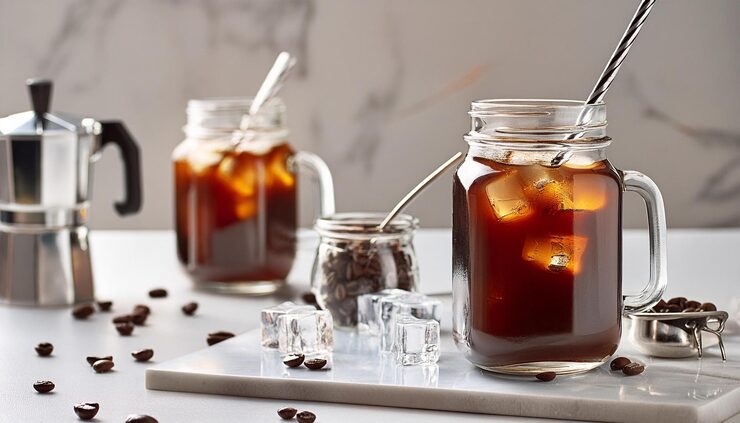
4. Cold Brew
Bean Selection Criteria for Cold Brew
- Bean Variety: 100% Arabica yields a crisp, refreshing Cold Brew with pronounced fruity notes; or an Arabica–Robusta blend (80:20) if you prefer extra body and richness.
- Roast Level: Light to Medium roast to extract full natural sweetness while minimizing bitterness and astringency during prolonged steeping.
- Grind Size: Coarse (similar to coarse sea salt or cracked peppercorns) to prevent over-extraction and ensure clean, sediment-free filtration.
Coffee-Standard Cold Brew Recipe Table
| Parameter | Reference Range |
| Coffee : Water Ratio | 1:4 – 1:5 (concentrate, dilute before drinking); 1:8 – 1:12 (ready-to-drink) |
| Grind Size | Coarse to Extra-Coarse |
| Steeping Temp & Time | Refrigerator (2–5°C): 16–24 hours; Room temperature (20–25°C): 12–18 hours |
| Filtration | Double-filtered: first through a mesh sieve, then through a paper filter |
| Storage | Airtight glass bottle in the refrigerator; best consumed within 7 days for optimal flavor and safety |
Note: The parameters above are for reference and can be flexibly adjusted to taste. If using a 1:4–1:5 concentrate, dilute with water, ice, or milk at roughly a 1:1 to 1:2 ratio before serving. Because Cold Brew has low acidity and is never boiled, do not leave it at room temperature after filtering.
Common Mistakes When Brewing Pure Roasted and Ground Coffee
1. Improper Coffee Storage
Leaving pure roasted and ground coffee exposed to air for extended periods, placing it in direct sunlight, or storing it in the refrigerator strips away its natural aroma.
2. Using Poor-Quality Brewing Water
Water makes up 98% of a cup of black coffee. Using tap water with residual chlorine, alum-contaminated well water, or overly hard water (high mineral content) alters the authentic flavor of the beans.
3. Incorrect Water Temperature
Using rolling boiling water at 100°C scorches the coffee grounds, extracting a harsh, burnt bitterness. Conversely, water below 85°C lacks the thermal energy needed for proper blooming.
4. Skipping the Blooming Step
Pouring all the water in at once without a 30–45 second bloom prevents trapped CO2 from escaping, blocking even water saturation and reducing the richness of your brew.
5. Incorrect Tamping Pressure
When brewing with a Phin filter or an Espresso machine, tamping too hard chokes the flow and results in a burnt, overly bitter cup; tamping too lightly lets water rush through, producing a weak, watery brew.
Frequently Asked Questions About Pure Roasted and Ground Coffee
1. How should pure roasted and ground coffee be stored after opening?
After opening the bag, squeeze out excess air and seal the zip-lock tightly (if using a bag with a one-way degassing valve), or transfer the coffee into an airtight glass or ceramic jar with a silicone gasket. Keep the container in a cool, dry place (room temperature 20°C–25°C), away from direct sunlight and heat sources like stoves, and never store it in the refrigerator.
2. Does drinking pure roasted and ground coffee support weight loss
Yes. An unsweetened cup of black coffee (about 240 ml) brewed from pure roasted beans contains only around 2–5 calories while providing natural caffeine that boosts metabolic rate by 3%–11% and stimulates the breakdown of stored fat into energy. Enjoying pure black coffee 30 minutes before a workout also enhances physical endurance and effectively curbs appetite.
3. Where can I buy reputable pure roasted and ground coffee?
If you are looking for pure roasted and ground coffee with clear origins and zero adulterants, Harvest Pure Roasted Coffee (a brand under HungHau Agricultural, a reputable and long-standing name in Vietnam’s agricultural sector) is a trustworthy choice:
- Carefully Selected Raw Materials: Handpicked from ripe coffee cherries in renowned growing regions of the Central Highlands, ensuring a high and uniform ripeness rate.
- Strict Production Process: Utilizes modern plain-roasting technology meeting food safety and hygiene standards-free from industrial butter, chemicals, or artificial flavorings-preserving the fresh, authentic taste in every pack.
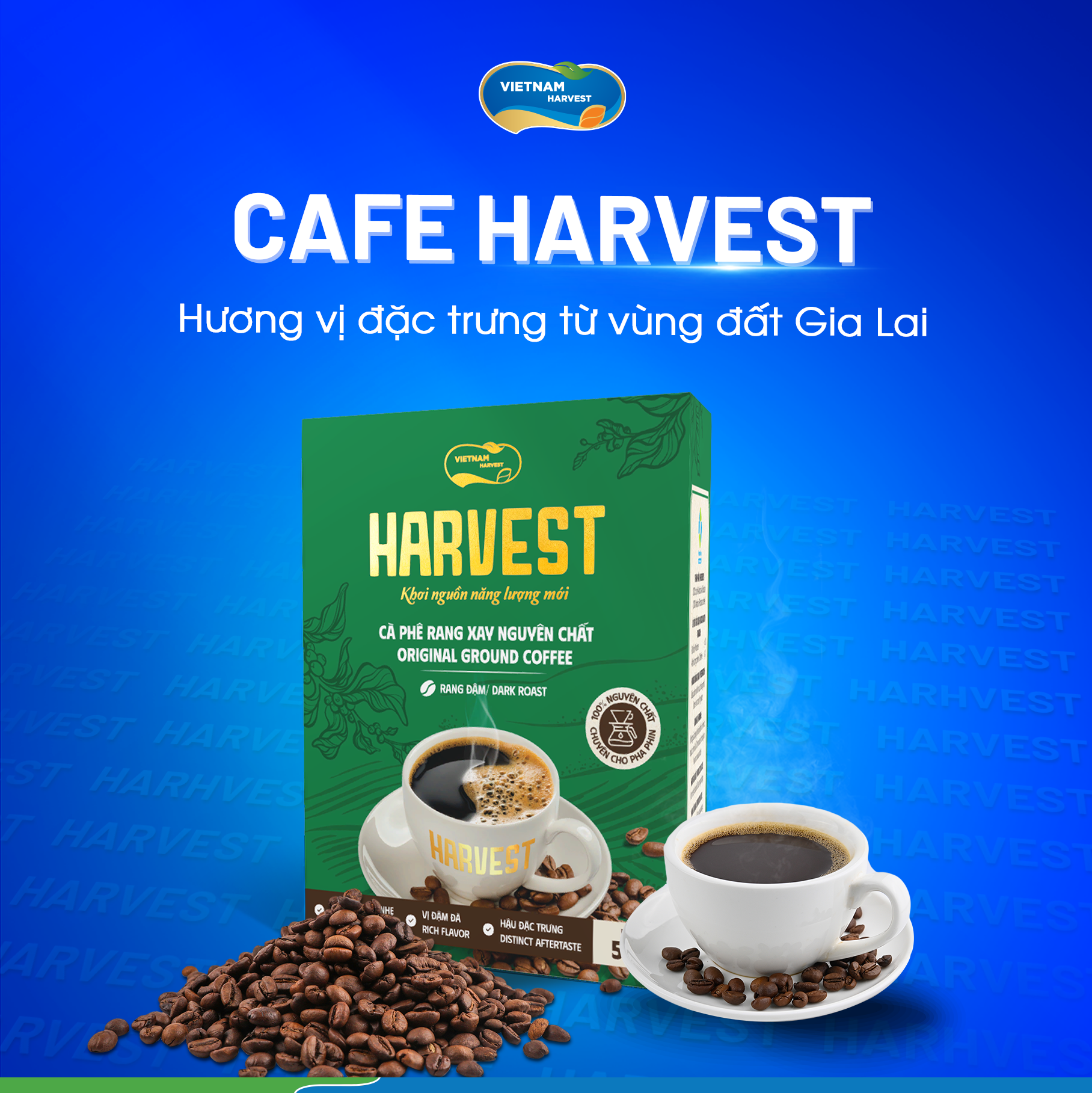
Understanding these characteristics, selecting the right brewing method, and avoiding common mistakes will ensure every cup you brew delivers its fullest flavor. Apply these methods today with Harvest Pure Roasted and Ground Coffee to enjoy a delicious cup of coffee every single day.
In-Store Shopping:
OChao H+ Supermarket: 889 Truong Chinh, Tay Thanh Ward, Ho Chi Minh City
OChao Store: 58 Co Giang, Cau Ong Lanh Ward, Ho Chi Minh Cit
Shopping Online:
Shopee: https://shopee.vn/hunghaufood
HappyFood Website: https://happyfood.vn
MyU: https://myu.vn/shop
Contact info:
Hung Hau Agricultural Joint Stock Company
Address: 642 Au Co, Bay Hien Ward, Ho Chi Minh City.
Email: international@hunghau.vn | Hotline: (+84) 963 130 333

 Tiếng Việt